bioStories Blog is an extension of the online magazine bioStories: www.biostories.com. Essays from the magazine, news, updates on contributors, and other features appear here.

Tuesday, October 11, 2016

A Death in the Family

by Sarah Russell

It was 1963, and at age 19, I felt like the original American in Paris—cafés echoing Hemingway and Fitzgerald, dapper Frenchmen to flirt with, and classes at the Sorbonne when I remembered to go. I was living La Bohème on the Left Bank in a one bedroom, fifth floor walk-up I found with Helen, another American stray from Redlands, California.

These were not the plush digs of the 16th Arrondissement. The place had no hot water and little heat, but we kept reasonably warm if we wore sweaters now that November winds rattled the windows. We shared a toilet in the hall with seven other people who lived on our floor, and I showered once a week down the street at the public baths. I stepped over winos to visit the corner crêperie at midnight when I studied late and ignored the whispered obscenities of vagrants who followed me home. After I opened the heavy outer doors and crossed the deserted courtyard, I would yell up the stairs and hope someone would turn on the hall light to guide me to the top floor. The light only stayed on for two minutes, so I always arrived breathless, often stumbling up the last flight in the dark.

Helen and I had a quid pro quo with two American guys who lived on our floor. We cooked and cleaned for them; they bought the groceries. We ate dinner together if we didn’t have dates, and on the 22nd, Mike from Tucson had just asked me to pass the bread when Peter from Detroit told us to shush as the words “blood on Jackie’s clothes” and “Dallas motorcade” came over the radio and into our consciousness. We sat stunned as the BBC announcer said the president had been taken to Parkland Memorial Hospital; they were operating; there had been a sniper. A short time later the sonorous, very proper British voice intoned, “I am sorry to inform the world that president Kennedy is dead.” Then, incredibly, he added, “And now, I believe we should all take a moment to compose ourselves.” And with that, the BBC went off the air.

Broadcasting resumed twenty minutes later, with moving tributes by members of Parliament and other dignitaries. The four of us stared at one another in grief, anger, denial. It was incomprehensible that this could happen. Not in America. Not to our president.

The next day on my way to the Sorbonne, the flags on government buildings flew at half-staff, and the buses had one French and one American flag in their brackets. I thought I looked like a native after six months in Paris, but apparently that was not the case since total strangers stopped me to say how sorry they were, as if I had lost a member of my family.

And, of course, I had.


Sarah Russell is in metaphor rehab after spending a career teaching, writing, and editing academic prose. Her short fiction and poems have appeared in print and online venues including Kentucky Review, Red River Review, Misfit Magazine, Everyday Fiction, and Shot Glass Journal among many others. Follow her work at www.SarahRussellPoetry.com.

Monday, October 3, 2016

Consecrated by Use

by Adrienne Pine


When my sisters and I were growing up, my mother collected S&H Green Stamps. She referred to them as her “mad money.” She got them every week at the store as a bonus for the money she spent on groceries. The stamps accumulated until there were so many that it was time for her to cash them in. Then we would hold a Green Stamps party, where my mother, my sisters, and I sat around the dining room table, each equipped with a stack of empty books to paste the stamps in and a bowl with a sponge sitting in a puddle of water.
The stamps came in perforated sheets. We separated the sheets of stamps at the perforations so they were size of the pages in the books—five stamps across and six stamps down. The backs of the stamps were coated with a glue that was activated when wet. The trick was not to wet the stamps too much—just enough to get the adhesive sticky but not enough to soak the stamps through.
It was pleasant work, sitting around the table, wetting the stamps on the sponges, and pasting them in the books, while our hands turned green from the dye, and Mom discussed with us what she was planning to buy. In this way she accumulated a blender, a steam iron, a toaster oven, an automatic “baconer,” and other useful objects. We loved to pore over the Green Stamps catalogue, calculating what she could buy, converting the amounts into what they would cost in dollars, and finding the best deals. One of my favorite items Mom bought was a three-tiered sewing box that cantilevered open. The exterior was white-and-blue wicker, the interior quilted blue satin. I thought it was beautiful, and I enjoyed helping Mom organize the spools of thread in different colors, embroidery scissors, tape measure, pin cushion, and thimble; the flat paper packets of sharp needles with eyes of different sizes; the little plastic boxes holding buttons, snaps, and hooks-and-eyes. Mom had been a home economics major at the University of Alabama, and she insisted that we all learn how to sew. I learned to sew but not to enjoy it, though I loved the accouterments and supplies.
When I was accepted into college, Mom promised to use her Green Stamps to buy me what I needed. For once, I had permission spend her capital, and I was determined to enjoy it. One hot June day after I’d left high school forever, we drove to the S&H Green Stamps store with two shopping bags of Green Stamps books and a list. I used Green Stamps to buy an electric pot to boil water for tea, a pillow, a mattress pad, a light blanket to start out the year and a heavier one for when it grew colder, two sets of sheets for a twin bed, and bright orange bath towels, so mine wouldn’t get confused with anyone else’s.
I had ideas about the sheets I wanted, and I wasn’t sure I would find them at the S&H Green Stamps store. Its linen selection was from J.C. Penney’s. When I expressed my reservations, Mom called me a snob.
“I’m not saying I won’t look,” I explained, “but I don’t want plain white sheets; I want a pattern, with nice colors.”
To my surprise I found two sets of sheets I liked right away. Blue was my favorite color in those days, and one set of sheets was blue and white in a geometric design. Its design featured two sets of parallel lines that crossed diagonally, meeting at right angles. A third set of parallel lines intersected the squares at every other row. The lines appeared to be woven through each other where they met; the effect was like an abstract trellis in Grecian blue and white. The fitted bottom sheet was blue on white, and the flat top sheet was white on blue, with a matching pillowcase.
The second set of sheets was in a floral pattern in shades of dusty blue, blue violet, lime green, and yellow green. The flowers appeared to be roses and cosmos. I liked the fact that the colors of the sheets did not correspond to the colors of the flowers in real life; it gave them an abstract quality, and they matched my color palette.
All through college I slept in my two sets of sheets, alternating them with each other, and they grew softer with repeated washings. After I graduated, I moved in with the man I would later marry, and we slept in a full-sized bed. I no longer had a use for the sheets, but I kept them on a closet shelf. They had a second life after our daughter was born, and she used them after she graduated from a crib to a bed.
My sheets became her sheets, though we bought her other sheets as well. And when she went off to college, she couldn’t take any of her sheets with her, because the beds provided by her college were longer than standard beds, and we had to purchase special sheets for them. Once she left home, we turned her room into to a guest room, replacing the twin bed with a full-sized bed.
Though I no longer own a twin bed, I have held on to my old college sheets. Now I use them only once a year, when I rent a house at the beach in August. I come to spend time alone, and then my family joins me. Before my family arrives, I sleep in a twin bed in a little room overlooking the sea. When my husband comes, I move to the big room with the larger bed. It is a nice room, but it only looks out to the yard.
I come alone to write, think, dream, and end each day watching the sun slip into the sea. I come when I am sick at heart, for the wide vistas and the silences, the healing sun and birdsong and rustling breeze, the fogs and drenching rains. I come for the moon-and-starlit skies, rolling surf and crashing waves, the sand between my toes, and the piles of rocks worn smooth as eggs by the surf. I come in search of my essential self, the girl that I was before I evolved into who I have become, the person I would still be even had I not followed the paths in my life that beckoned me.
          Built by an artist for himself, the house dates from the middle of the last century, which means it is as old as I am. From the first time I saw it more than thirty years ago, it seemed to me that the owner might have been designing it for me. Its setting on a hill sloping down to the sea. Its modest scale. Its grays and blues. The handmade attention to every detail. The artist’s paintings on the walls. The drawings of his friend. Here I have always found everything that I need.
          Like my old sheets, I bring old clothes with a talismanic quality—a white cotton smock I use for writing, an ancient gray sweatshirt. Faded beach towels, a white cotton nightgown, old jeans, cut-offs, stretch pants. I bring a needle and thread, and like my mother, I mend what is torn. I wash my sheets and clothes and hang them to dry and bleach in the summer sun, smelling of roses and the sea. And when I leave, I put my old clothes and my old sheets away, and I hope I will return the following year.


Adrienne Pine’s creative nonfiction has appeared in A Tale of Four Cities, The Yale Journal for Humanities in Medicine, The Write Place at the Write Time, DoveTales—Nature: An International Journal of the Arts, and Rebeldes Anthology.

Thursday, September 22, 2016

Irretrievable Breakdown

by Anya Liftig

Yellow piss snow was piled outside the window. Slushy puddles of ice pellets welled up on the corner. We had both given up the idea that there was anything romantic or charming about the layers of snow we trudged through. The weather was something to be endured, just another difficulty we put up with to live in this city, the greatest city in the world.
Inside, the radiator was turned up to broil, shriveling my nasal passages despite finding a formidable foe in the humidifier. Most mornings I woke up on a pillow splotched with flecks of red. My side of the bed was inches from the back window and when it got cold, I could feel the wind blow through the cracks around the frame. I tried any and all methods to seal it up—industrial plastic, caulking, construction foam, duct tape. I stuffed plastic grocery bags in the gaps between the panes, wadded up a years’ worth of white and red Target bags into the holes. I fought the cold with thin layers of Saran Wrap stretched taut over the dirty glass.
At least it was better than the last place I lived where, when it rained outside, it rained inside. There I had rigged up a grey plastic tarp over the bed, hoisted with a complex system of pulleys made of rope from the dollar store. Living in this city always meant taking matters into my own hands as far as repairs were concerned. When things went wrong, I fixed the offending article myself or I learned to live with it. This was the same method I used on the leaky pipes under the sink. I removed what looked like the guilty piece and trekked back through the snow to the hardware store. I used three rolls of duct tape to secure its pathetically incongruous fixture. I wrapped the whole thing in cut up towels and then wrapped those in another roll of duct tape. A fool-proof barrier. I could always fix things myself, even if they still looked more broken by the time I finished with them.  

The apartment was once just his apartment, until he asked me to move in seven years ago. Then it became “our” apartment—all 375 glorious square feet of cozy, adorable basement studio of it. It was supposed to be a temporary nest on our way to a larger and hopefully, jointly owned place. A year packed in there together, tops. It would be an adventure, not unlike living on a sailboat. Every item had to nest neatly into every other item. There was no room for storing anything. At the grocery store, I bought only the smallest amounts—one roll of toilet paper at a time, one tiny bottle of dish soap, just enough for the dishes we washed in the Lilliputian sink. I decorated using miniature figurines—bits of my childhood Barbie collection. In the medicine cabinet, I displayed my tiny collection of thimble-sized porcelain houses. I stationed a few Smurf figurines on the faucet, not far from where Gumby contorted himself around the hand soap. I exploited the fact that our front door was made out of cheap steel alloy and turned it into a magnetic board with magnets made by cutting up misogynist ads in old issues of Ladies Home Journal. My sticker soaked love notes hung there, like a toddler’s artwork decorating a refrigerator. Using my sister’s abandoned pull-up bar, I made curtains out of fabric I brought back from Thailand. This was intended to create an illusion of privacy.

This apartment was in a brownstone, the most beautiful brownstone on the most beautiful street in the most beautiful neighborhood in Brooklyn, which, in case you didn’t know, and how could you not know, is just about one of the most beautiful and important places in the whole world. Inevitably, we were surrounded by inordinately beautiful people wearing crisp, tailored clothes, strolling beautiful children with perfect, cherry red pouts; children who thought artisanal thoughts while buried under layers of the softest goose down; children who knew the taste of capers before they knew the taste of failure.

Each week, on the eve of trash day, scavengers would rifle through the neighborhood garbage nabbing a slightly scuffed Eames lounger here, a crooked Knoll bookcase there. In fact, it turned out that there was a whole black market economy funded by our trash. Leave something out on the street and the next day, it would be on Craigslist, spruced up with a slap of paint and new knobs. There also appeared to be a neighborhood syndicate solely devoted to rummaging for cans and plastic bottles that could be returned for deposit. The tiny, wiry Chinese women were the most aggressive. They would shove you out of the way in front of your own can. And why not? Here were thousands of people who were so rich that they literally threw money out in the trash. It would have been criminal not to capitalize on the distinctly American combination of waste and laziness. It was not unlike living under a swarm of quietly hovering buzzards patiently waiting to softly peck out your eyes.  

But even this oddball ecosystem was strangely beautiful and if there was ever any question about its merits, it was ugly in only the most beautiful, most significant way: five dollar cups of licorice-noted pour-over coffee, ice cream made from the milk of cows rocked to sleep every night with Ukrainian folk songs, letter-pressed note cards embossed with the ink of blueberries picked by workers paid a living wage, pimento loaf imported from the most ass-backwards county in Alabama. Everything was sourced, curated and sustainable, each moment a precious opportunity to be more authentic.

We lived below some of these beautiful people; only they were some of the most detestable people anywhere. People who treated us like poorly paid help, people who had omitted the words “thank” and “you” from their vocabulary in favor of Neolithic cave man grunts. People who thought we were serfs and they the lords of the manor. They assumed that because we lived beneath them in their illegal in-law suite, we were untouchables. Our sleep was not as special as their sleep, our migraines paled in comparison to theirs, their mail was far more important than ours. Everything that went wrong in the house was our fault.

Once, the lord of the manor let himself in unannounced with designs on fixing the front window. Since he usually let himself in uninvited to turn down the thermostat, his new chore intrigued me. He removed his hammer from his tool kit and promptly managed to put a 3ft long crack in the glass. It was winter and the wind whistled through. He promised to come back and fix the damage within the week. But three months passed and I decided, once again, to take matters into my own hands. If we couldn’t get him to fix the window, we could at least shame him into submission. I taped bright red duct tape along the crack and covered the whole thing with newspaper, pointedly not The New York Times or even the Daily News but rather, USA Today, a copy of which I could only obtain by sneaking into the Quality Inn in Gowanus. Anyone passing by would think that yes, the neighborhood was regressing, unbeautiful, that basically illiterate people lived in our building.  Even our pot dealer who delivered to us every Friday night pronounced it ghetto. It wasn’t long before the lady ordered her lord to fix the eyesore.

Their precociously blockheaded offspring only played with items they could kick or torture. They pegged us first with snowballs and later with rocks when we came or went. They nailed live insects to the back door and lit them on fire. They threw curveballs at cats, howling with laughter when the poor creatures absorbed the thunk. These blockheads squealed with giddy delight when they pissed in the drain outside our bedroom window—the scent of boy stink lingering for weeks. They giggled while they took their blockheaded shits in the backyard. One day in the spring the beautiful but horrible blockheaded mom went out to plant her tulips only to find herself excavating tiny boy turds. A few days later, she demanded her husband cover the whole yard with Astroturf.

Technically, we had no claim on any of the backyard. I knew this wasn’t written in the lease because we had no lease, more of a gentleman’s agreement that we could live there and pay money. I looked enviously at the blockheads as they tossed basketballs, aiming not for the hoop but for the more important parts of each other’s heads. All that lovely space out there, all it off limits. Occasionally, when I thought the horrid people had gone out to a BBQ with their rotten friends, or when I knew they were on vacation making some other place miserable, I would sneak out and lie on the fake grass. I’d stare up into the sky and pretend that I was tripping on mushrooms, watching the leaves morph and swirl like soft serve ice cream into one another. I’d roll up and down the breadth of the yard until I made myself nauseous. I’d look up into trees and imagine what it might be like to live in the curve of a question mark.

Once, in the middle of the winter, when there was almost a foot and a half of snow outside, I left myself out the back gate. It was midnight and I was barefoot, shivering in a t-shirt and panties. I walked to the far back of the lawn, where the plastic met the flagstone, and stood still, waiting for him to come rescue me. The snow burned my feet with cold. I looked up into the night sky and tried to imagine I was flying away from that place, sailing through the air on a plane to somewhere farther than far. After ten minutes, I couldn’t take the pain anymore and I slipped back through the gate and fell into bed. I lay my freezing feet on top of his. Nothing. Finally, I said straight out, “I just went out in the snow in my bare feet and underwear and I looked up at the sky and tried to imagine that I could fly away from here and you didn’t even notice I was gone, you didn’t even try to find me even though I left the door open so you would know where I was. So you couldn’t help but come and rescue me from the cold.”

“Are you crazy?” he asked through a haze of sleep.

As if I would know.

This was just one instance in a season of similar celebrations. Another night, unable to sleep again, and done with my insomniac exercises—naming every word starting with the letter S, listing every female author I knew, every store in Herald Square—I got up and slipped through the curtain that we both desperately needed to be a wall. I walked to the kitchenette, opened the utensil drawer where each spoon was nestled carefully inside each other, and pulled out one of the old steak knives that my mom had given us. It had a worn wooden handle with several gouges—evidence of long, dutiful battle with my mother’s pork chops. I crawled back into bed and began to softly scrape my forearms with the blade, first on the left side and then on the right. My inner arms were white canvases when I put the blade on my skin. I hung on the threshold of puncture for a while, sawing silently, waiting for him to wake.


Anya Liftig is a writer and performer. Her work has been featured at TATE Modern, MOMA, CPR, Highways Performance Space, Lapsody4 Finland, Fado Toronto, Performance Art Institute-San Francisco, Atlanta Contemporary Art Center, The Kitchen at the Independent Art Fair, Performer Stammtisch Berlin, OVADA, Joyce Soho and many other venues. In “The Anxiety of Influence” she dressed exactly like Marina Abramovic and sat across from her all day during “The Artist is Present” exhibition. Her work has been published and written about in The New York Times Magazine, BOMB, The Wall Street Journal, Vogue Italia, Next Magazine, Now and Then, Stay Thirsty, New York Magazine, Gothamist, Jezebel, Hyperallergic, Bad at Sports, The Other Journal, and many others. She is a graduate of Yale University and Georgia State University and has received grant and residency support from The MacDowell Colony, Yaddo, Atlantic Center for the Arts, The New Museum, Mertz Gilmore Foundation, Flux Projects, University of Antioquia and Casa Tres Patios-Medellin, Colombia. Visit her at: www.anyaliftig.com.

Thursday, September 15, 2016

Stacey

by Louis Gallo

This goes back to the Pleistocene and I'm all of thirteen in the first year of junior high, a hive full of thugs and hoodlums and insane maniacs where I definitely don't belong but my parents don't know any better and say I need experience so you can imagine the everyday terror like when I see one kid pull a .38-revolver from his pocket and brandish it around screaming, it's loaded, but there's bliss too, in band class when I see Stacey who is so far out of my league it's like glimpsing the edge of the universe though in fact she sits right next to me, second chair flute to my first, and she's a fully developed woman at thirteen and everyone agrees queen of the school and head majorette and twirler and dancer and whatever her reasons and against all odds she likes me and I of course adore her and when the band director Mr. Gendarvis taps the podium with his wooden stick to start a Sousa march she presses her thigh firmly against mine and I can hardly stand it and hope Mr. Gendarvis doesn't notice what's happening to me though how could he not? The whole class period, our thighs fused together, imagine, even with that heavy Cor Jesu senior ring glued to her finger with wax, her boyfriend, Tommy, from the Catholic school, rumored the toughest motherfucker in all Gentilly, you don't mess with Tommy for any reason, much less his girlfriend, and yet . . . so this goes on for a few years and I'm finally sixteen with a learner's permit and I borrow my grandfather's golden Imperial with its legendary wings and spend five hours washing it for him and in return I can take Stacey out on a date in it so I rub every smudge from every window with Windex and scrub the white walls with Brillo pads until my fingers bleed, that's how obsessed I am and, by the way, Stacey has broken up with Tommy and has chosen (that's exactly the word, chosen) a new boyfriend, Joey, and Tommy beats the crap out of him right in the school yard with everybody gathered round to watch like some Roman spectacle and Joey returns a few days later with black eyes, a broken jaw and his face swollen like a pumpkin but he doesn't care because now he's got Stacey and he's a hero by default and they walk through the corridors like royalty and I wonder if he will beat the crap out of me because I'm taking her out in my grandfather's Imperial, which is really happening, despite Joey, and either he knows or doesn't care because I don't care. All I care about is Stacey, my first real love, my goddess . . . and I drive her out to the Point, this meager peninsular at West End that pokes out into Lake Pontchartrain and we pass the ancient light house, where the Point stops, and there's space for about fifty cars where everybody makes out and I've wanted to do this for three torturous years so I slide over on the seat and wrap my arm around her shoulders and she flicks away her Salem and I press my lips onto hers and I love it but know the kiss is no good, not really a kiss, because she keeps her lips to herself, clenched, and just sort of puts up with me messing around with them with my mouth and, oh Jesus, three torturous years, those thighs fused to mine in band, her sweet smile, her everything. But she's just putting up with it because she definitely does like me, I swear to that, but maybe not the way she liked Tommy or likes Joey, which sort of pisses me off because I just don't get it and I pull away and slide down low and rest my head on the seat and sigh really loud though I'm ignited inside and don't know what to do or say and she says nothing but lights up another Salem and asks if I want one but I say no, I don't smoke, and I didn't then, and suddenly I feel nauseous—her lips taste like ashes, and yet I will kiss ashes, lick ashes, eat ashes, smear my face with ashes, vomit ashes for more of her.


Louis Gallo’s work has appeared or will shortly appear in Southern Literary Review, Fiction Fix, Glimmer Train, Hollins Critic, Rattle, Southern Quarterly, Litro, New Orleans Review, Xavier Review, Glass: A Journal of Poetry, Missouri Review, Mississippi Review, Texas Review, Baltimore Review, Pennsylvania Literary Journal, The Ledge, storySouth, Houston Literary Review, Tampa Review, Raving Dove, The Journal (Ohio), Greensboro Review, bioStories, and many others. Chapbooks include The Truth Change, The Abomination of Fascination, Status Updates and The Ten Most Important Questions. He is the founding editor of the now defunct journals, The Barataria Review and Books: A New Orleans Review. He teaches at Radford University in Radford, Virginia.

Wednesday, September 7, 2016

Taylor's Drain

by Joy Weitzel

I look over the ridge and see green. I tell my husband to stop the car so I can take a picture; I want to remember what it looks like from up here. From this view, I see a few vultures floating on wind currents, looking more majestic than they should. I see tree tops and ridges that fall into valleys where patches of light green signal a farm or pasture. I can’t see within the green tree mass that guards the rhododendrons and their tangling pink flowers, the mossy stones that peer out of fallen leaves on the forest floor, or the little stream that trickles over stones but cuts a deep path, every drop running over sandstone to find the Tygart Valley.
I wait for a vision, a time machine to fall from the blue sky with its date set to 1847. If time machines were real and fell from the sky, I would hop in, and, as the lights and whistles spun around me, the mountains would reverse the seasons several times over. The trees would shrink back into the earth, leaving the ridge bare. Loggers would replace the timber with their axes, putting the poplars and birches back in place. Fields would open and close like fish rising, their lips breaking the surface to create ripples. When it all stopped, I would look out from the bald ridge I stand on, and I would search for a sign, something that says “I am here; this is my home. Come see me, and I’ll show you my life.” It would be above a cleared field that you might be plowing at this very moment, pushing the metal and the wood through the dirt. I would walk beside you, while you told me of the journey, the bear you killed last fall, how you know the earth—the technique for sowing and harvesting. You would teach me how to push the plow behind the mule, though I would slip in the dirt as the iron hit stone.


A little hill rises on our left, where two deer graze in a green cemetery. They flee when they see us, lifting white tails. As I climb the little hill, I find names—Boehm, Mitchell, Hathaway, Weaver, Proudfoot. The wind and rain have worn the gray markers so some names cannot be read; they stand, lie, or lean bare and blank. By the number of stones with our name, I can tell you have frequented the familiar trail to this place. There is your thirteen-year old son, who died while older sons went to war. There is the daughter who never married. There is your wife of nearly forty years. There is your son who fought in the Civil War, came home, married twice, and died in December.
You are nearby, lying flat beneath the shade of surrounding trees. I brush away wet grass that has settled in your name as if I were brushing away hair from your face. I want to clean you up, remove the dirt that hugs a hand holding a Bible. Though it is just a stone, I sense an odd connection to the damp dirt in which you lie. Your presence dwells in the dates, in the carved hand, in the imprint of your name, in this gray stone lying on its back. The dirt is what I’m supposed talk to because this is what remains: bony fingers, hollow eye sockets, your best Sunday suit. You are earth now, dead and decomposed. But I don’t think about that.
I think about what to say.
I don’t go to cemeteries often. I’ve escorted grandparents, lying in coffins, to their earthly rest, but I never stayed long enough to know their stones. I rarely return. Now I come looking for history.
My fingers touch your marker, deciphering its Scripture. I came here to see you. To see how fast you ran, how you looked at creeks and saw fish hiding in shadowy depths, how you looked at your wife when she was young and when she was old, how your son, Ephraim, climbed up your lap and asked about the bear, how you read the Holy Bible or depended on the farm, on nature and wind.
You chose this place beside the Tygart Valley River for a reason. You looked up and saw timber spread over a half-million mountainous acres. You shook ancestral seeds and scattered them: corn, wheat, oats, barley, soybeans. You might have cleared a few acres for crops, a few for future pasture. Your axe swung to heave your home in place; muscles ripped as the impact of metal reverberated through handle, through narrow wrists and elbows, through a strained bicep and shoulder, through an aching neck that lately had been giving you trouble, and through the skull holding the brain that told you, “good will come.” Your patch of light-green broke the surface, rippled the dark and tangled, and finally grasped the mayfly.
We can’t go back in time to meet with a handshake or a hug. I can’t make your stone speak any more than I can the trees or the ground. All is silent. As my knees become wet with dew and earth, I wonder if I’ve matched you with who I think you are or if you are still a stranger. Then, a woodpecker taps the telephone poles and a grouse beats its wings like a motor. We both know these sounds.
This is what I say: I am your fourth great granddaughter. I have a heart for Great Lakes, and I’m good in a kayak and on skis. When I go, I like to go farther, to the very end, so I can see mountaintops colored with fall and winter’s blanket backed by Lake Superior. I’ve been taught these things like you’ve been taught by your father, and now I’ve completed the circle to see that part of me is here—in this cemetery called Taylor’s Drain.


Joy Weitzel teaches composition in Cadillac, Michigan. She received her MA in English from Northern Michigan University in 2014 and completed a creative non-fiction thesis that explored the history of her family. A wanna-be genealogist, Joy is currently working on finding her roots and expressing them lyrically. Her work has been previously published in the Rappahannock Review.

Tuesday, September 6, 2016

bioStories Alum Has New Book with Little and Brown

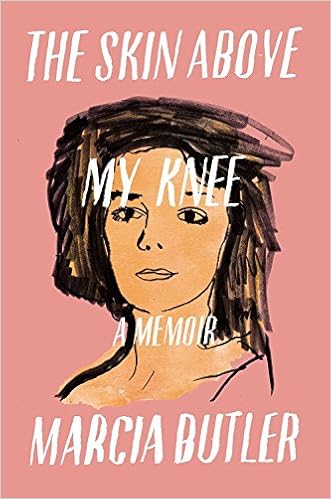
We're pleased to announce pre-order opportunity for Marcia Butler's memoir The Skin Above My Knee, forthcoming from Little and Brown. Marcia had work featured in Volume 4, Issue 2 with the title "Cells". We're excited for this new book from Marcia and wish her well with it. The advance reviews are tremendous.

Wednesday, August 31, 2016

Midnight Stops

by Eugene Durante

The Manhattan bound train is empty as it lurches forward and begins its midnight journey out of Coney Island. Winter winds whip through the train when its doors open as passengers board at the elevated stations. Most are headed to a night shift job or New York night out. My police radio is dead silent. With only one year on patrol I have yet to learn the best crime fighting efforts do not come from police executives or politicians, but from the tendencies of Mother Nature.

My assignment to late night train patrol was precipitated that winter by a ‘lush worker.’ He was cutting open the pockets of passengers to remove personal items while they slept. The crime is not atypical for the hour or area, and the eyewitness description of the perpetrator was a black male eighteen to thirty years old wearing a black jacket, black jeans, and armed with a box cutter. My platoon had been briefed numerous times about the robbery pattern, and with rookie ambition we certainly generated many stop and frisk reports that winter for the NYPD.

As the train pulled into the Neck Road station, I saw a figure on the opposite platform. He was a tall black man with braided hair, and he wore a full length black jacket and black pants. His hands were in front of him and he was facing the wall while awkwardly pivoting left to right. I could not tell if he was kicking the wall, marking it with paint, or moving back and forth while urinating.

Utilizing the advice of veteran patrol officers, I exited the train and stepped down a few stairs to tactically survey the cloaked figure out of view. Fortunately, his train had also just left and there was ample observation time. His behavior persisted, so I quietly approached for a closer look, but while crossing to his platform I made a common rookie mistake.

My radio had begun screeching and I quickly muffled it with my hands. The male froze, then looked around. I was surprised he heard the noise from the distance, but Neck Road is an eerily silent place at night. Prior to renovation, the train station was a spawning ground for rats and pigeons, and to this day there is not enough revenue to justify staffing the token booth overnight.

Broad shouldered, the curious figure turned my way and stood silent as I slowly approached. His hands were at his sides and his fingers were spread apart. He looked about forty years old from the sporadic gray hairs in his braids. I sensed he was no stranger to being stopped by the police.

“How you doin?” I casually asked, utilizing a common Brooklyn greeting.

“I'm lost,” he said. “I fell asleep on the train.”

Getting closer, I noticed black dress shoes and a black suit beneath the trench coat—not the common attire of a lush worker.

“Must’ve been a good sleep,” I said. “You’ve drooled on yourself.”

He started wiping his coat with a handkerchief, yet he awkwardly looked away and not at the stain as most people would. Then I noticed his walking stick and backpack on the floor next to a garbage pail.

“I know my home station perfectly,” he said gathering his articles, “But I have no idea where I am now. Thank you very much for being here.”

“Just check your belongings, Sir. Unattended items grow legs quickly in Brooklyn,” I replied. “These scummers will steal your walking stick if you weren’t looking.”

He smiled, and with that we broke the ice.

We made small talk as we walked toward the Manhattan bound platform. He reminded me to let the blind person grab your arm for better guidance. We exchanged names as I led him to a bench.

“So how long are you on the job?” he asked while using air quotes. I replied, then I enquired if he was born blind or lost his vision over time.

“My sight has diminished in the last decade,” he said, “but I can still see silhouettes.”

“That's very fortunate,” I encouraged.

“Sometimes I wish I never had vision though,” he said while adjusting his long coat in the thick wooden arm rests of the bench. “I think I'd have less anxiety overall.”

He continued; “Instead of earning my independence as a man in this world, I'm forced to live with my mother and sister for support. I'm blessed that I still have family, but I always dreamed of moving out of the ghetto after college. It's sad enough that I've changed, but I have witnessed myself become a different person to others.”

His voice then cracked, “To the outside world I’ve become a ‘he,’ as in would ‘he’ like a chair or booth, or would ‘he’ like another cup of coffee...as if ‘I’ never existed. You have no idea what it feels like when I go shopping and I ask the salesman if a shirt is a lighter or darker tone of black, and his response is, ‘Does it really matter?’”

“I used to always date hot women,” he said, “and now I'm alone. Heck, I don't even know what the Spice Girls look like.”

The blind man became silent and looked away into the darkness. The rattle of a distant train started vibrating the tracks. We then boarded the train together, arm-in-arm, toward his home station. On our way we discussed our experiences growing up in Brooklyn and how the city was changing. Upon arriving at Newkirk Avenue he softly pushed my arm away.

“I got this,” he said, and he breezed up the stairs and out to street level. I followed him up the steps, and we stopped together on the sidewalk. I offered to walk him home, but he insisted on walking alone.

“No problem,” I said. “I understand we both have reputations to protect in these parts.” We shook hands and extended that half-a-hug gesture that men do so well.

“Hey, Gene,” he said, “thanks again for being there, and more importantly, thank you for treating me like a regular guy.”

He walked away as my radio reverberated off the buildings on Marlborough Road.
Though I do not remember his name, the man’s heartfelt compliment was poignant and lasting. That appreciation is rarely experienced on patrol any more. Yet after two decades in public service, I’ve learned to embrace the lasting value of small deeds. Helping many people in little ways, with empathy and compassion, can be more beneficial to the spirit than helping a few people in big ways. Such interactions benefit the public by breaking down barriers and cops’ professional selves by promoting positive solutions. As police officers, we’re conditioned to think our careers are defined by newsworthy events, but too often we overlook the touching moments that help us become better cops, and better human beings.


Born and raised in Brooklyn, NY, Eugene Durante is an NYPD patrol officer and front row observer of the offbeat. City University of New York educated, Durante received his B.A. in Criminology and his Master's in Public Administration. "Gino" is well-known for not stroking others and not getting stroked in the process.